1
/
of
1
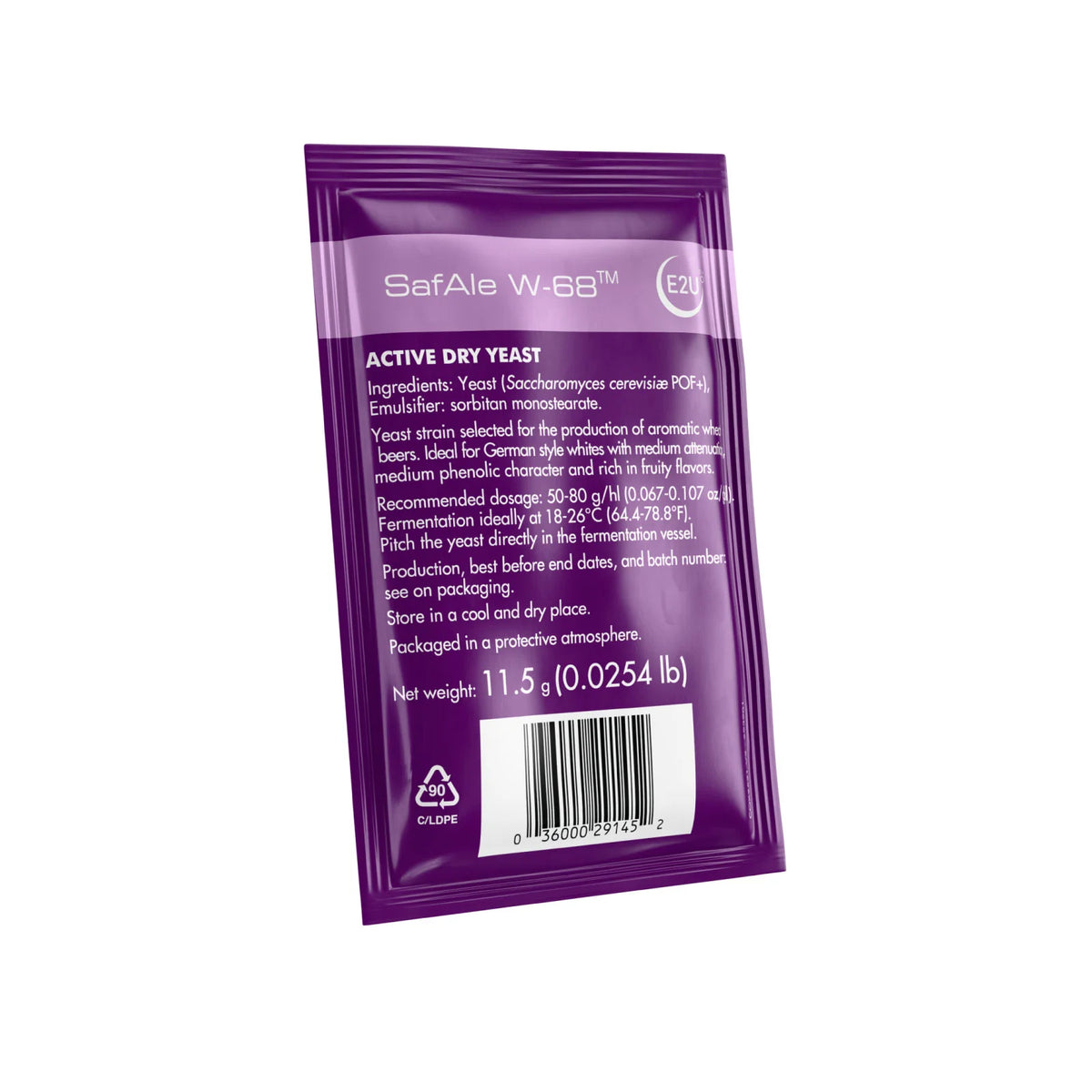
Safale W-68 Weizen Ale Yeast
Safale W-68 Weizen Ale Yeast
Regular price
R 98.00 ZAR
Regular price
Sale price
R 98.00 ZAR
Unit price
/
per
Taxes included.
Shipping calculated at checkout.
Couldn't load pickup availability
Safale W-68 Weizen Ale Yeast
Bavarian wheat brewer’s yeast producing an intense fruity and spicy fermentation character, rich in banana and clove notes. Forms a thick foam head and presents a medium sedimentation, leaving a classic powdery haze when re-suspended. Ideal for traditional German wheat styles and fruity-spicy oriented beers.
Technical data sheet available here
- Top fermenting
- 11.5g sachet
- Alcohol Tolerance: 9 - 11%
- Apparent Attenuation: 78 - 84%
- Sedimentation: medium
- Temperature: 18 - 26°C
- Total Esters: High
- Beer styles: German Hefeweizen, Dunkelweizen, Weizenbock, Kristallweizen, and fruity-spicy ales.
Pro-Tips for Brewing with SafAle W-68
-
Master the Clove vs. Banana Balance: As the classic Weihenstephan strain, W-68 is packed with isoamyl acetate (banana flavor).
- For more banana: Ferment on the warmer side, around 21–23°C (70–73°F).
- For more clove/spice: Ferment cooler, around 18–19°C (64–66°F), and consider adding a ferulic acid rest at 43–45°C (109–113°F) during your mash to build the precursor for clove phenols.
- Rigorous Krausen Warning: True to its liquid lineage (like WLP300 or WY3068), W-68 ferments incredibly fast and aggressively. It builds an enormous, thick foam head. Always use a blow-off tube or ensure you have at least 30% headspace in your fermenter to prevent the lid from popping off.
- Managing Sulfur & High Attenuation: This dry strain attenuates surprisingly high (often finishing around 80–82%), which can yield a dryer finish than expected for a Hefeweizen. Mash slightly higher, around 68°C (154°F), to leave some residual body. It also produces a notable amount of sulfur during active fermentation; give the beer a brief conditioning or cold rest to let the sulfur aromas completely dissipate before serving.
-
Avoid Bottle Conditioning: Fermentis explicitly recommends against using W-68 for secondary refermentation in a bottle or keg. It is highly dynamic during primary fermentation but is not optimized for conditioning phases.
Share